Medication management is a major issue for patients, especially those with vision problems. Medication errors, often linked to visual difficulties, are frequent and can lead to serious health complications, particularly in patients with multiple medications. In this context, the pill dispenser is an essential tool for organizing and securing the daily intake of medication, while reducing the risk of errors. How can the pill dispenser and its functionalities help visually impaired patients avoid medication errors, while guaranteeing optimal compliance?
Medication errors among the visually impaired
People with visual impairments are particularly at risk for medication errors because of their difficulty in reading medication labels correctly or visually distinguishing between different pills. Conditions such as advanced presbyopia, cataracts, or macular degeneration affect patients’ ability to identify medications, follow dosing instructions, or take doses at the right time. These difficulties increase the risk of non-adherence, such as taking the wrong dose, confusing different medications, or missing a dose. These risks are compounded when the patient also experiences medication errors related to memory impairment, a common occurrence among older adults taking multiple medications.
These visual impairments make people particularly vulnerable to medication errors. The inability to distinguish between tablets, or to read the small print on medication boxes, can lead to incorrect intake, or even unintentional interruption of treatment. The pillbox is therefore an indispensable tool for these patients, enabling them to organize and manage their medical treatment more independently and safely. The pill dispenser, with its daily or weekly compartments, helps to structure the taking of medication according to the precise times of day, thus reducing the risk of errors.
The pillbox: a treatment management tool for the visually impaired
The pill dispenser is a device for grouping medications by day and time, facilitating the management of complex medical treatments. Each compartment of the pill dispenser is dedicated to a specific time of day (morning, noon, evening, night), enabling patients to clearly visualize when they need to take their medication. This system not only helps prevent forgetfulness, but also avoids errors such as double-taking or incorrectly taking a medication.
For visually impaired patients, a pharmacy-prepared pill dispenser is recommended for safety. Labels can be adapted using large print, distinct colors for each time of day, or visual symbols to make medical instructions easier to understand. These improvements make it easier for patients to manage their medication despite their eyesight problems, while ensuring better compliance with treatment.
New technologies: invaluable support for visually impaired patients
Developments in medical technology have considerably improved treatment management for visually impaired patients. Secure pillboxes and mobile applications now enable treatments to be monitored in real time, and warn patients or their carers if they forget to take their medication or take it incorrectly. These innovative solutions make it easier to care for visually impaired patients, offering them constant support in terms of both organization and treatment.
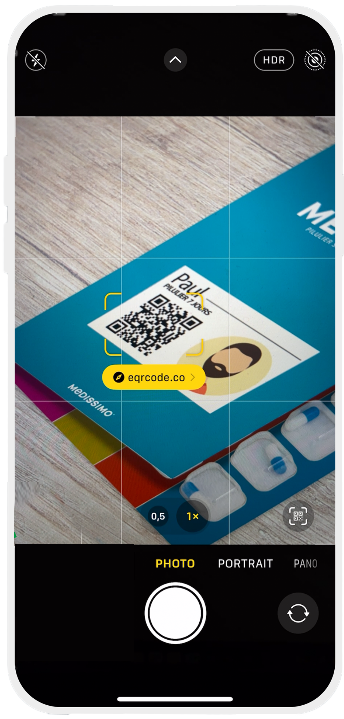
The secure pill organizer, such as those offered by Medissimo and prepared at the pharmacy, is connected to a mobile app that alerts the patient when it is time to take their medication. For visually impaired patients, these reminders are particularly useful, as they compensate for visual difficulties and help ensure good treatment adherence. In addition, these devices allow patients and caregivers to monitor treatment remotely and access additional information about medications by scanning a QR code. This traceability is especially important for medication management in emergency situations, when a healthcare professional needs to quickly identify a patient’s current treatment regimen if the patient is unable to describe it themselves.
Mobile applications can also be used to personalize notifications, reminding patients to take their medication on time. These digital tools are particularly effective in facilitating communication between healthcare professionals and caregivers, enabling doses or dosing schedules to be adjusted if necessary. Nurses, pharmacists and doctors can monitor compliance and ensure that treatment is correctly administered.
Collaboration between healthcare professionals and caregivers
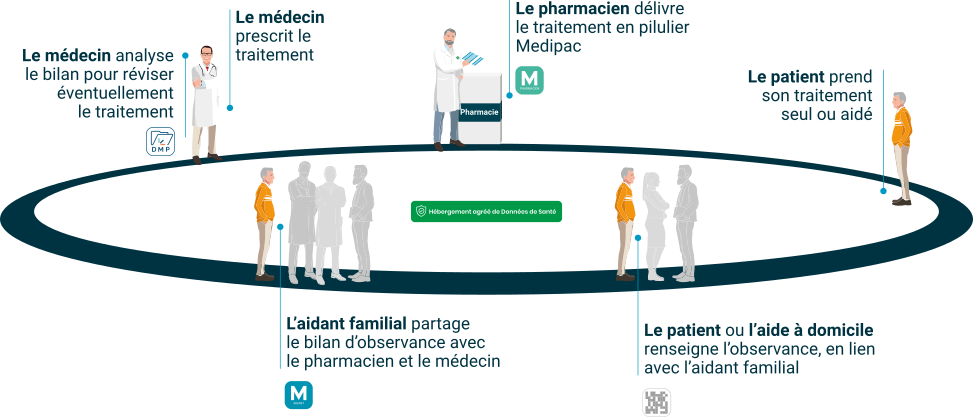
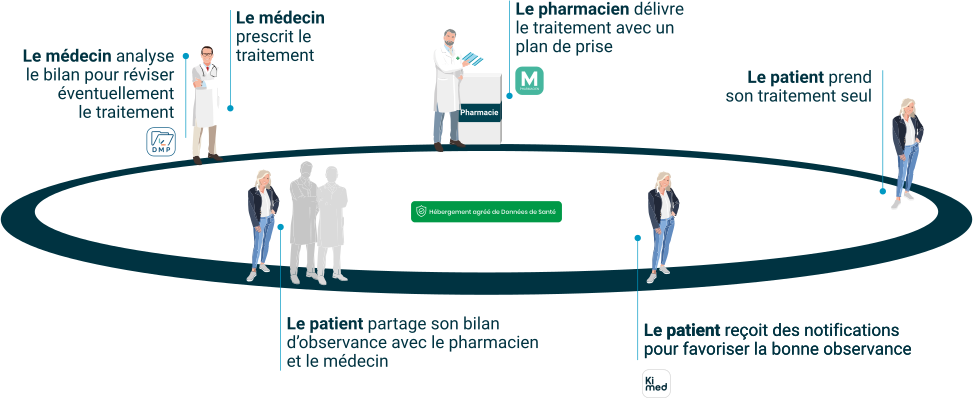
Effective treatment management for visually impaired patients relies on close collaboration between healthcare professionals and caregivers. The role of each in the preparation and administration of medication is vital to ensure compliance and prevent medication errors.
The prescribing physician adapts the treatment to the patient's visual capabilities. When prescribing medication, he or she must take account of visual impairments, and recommend the use of an adapted pillbox or technological solutions that facilitate the taking of medication. The doctor must also check that prescribed doses are compatible with other treatments, and ensure that drug labels are clear and easy to understand.
The pharmacist is responsible for preparing the pill dispenser and personalizing the labels. In addition to ensuring that each medication is placed in the right compartment, he or she must ensure that labels are adapted to the patient's specific needs. This includes the use of larger typefaces, distinct color codes and visual instructions to facilitate reading. The pharmacist also plays an educational role, explaining to the patient or their caregivers how to use the pill dispenser correctly, and answering any questions they may have about treatment.
Nurses and caregivers are often responsible for ensuring that visually impaired patients take their medication as prescribed. Their role is to ensure that the pill dispenser is used correctly and that each dose is administered at the right time. In the event of poor compliance, they must inform the doctors or pharmacists so that adjustments can be made if necessary. This inter-professional collaboration enhances patient safety by ensuring effective cooperation in care.
Good practice in the use of pillboxes for the visually impaired
To ensure optimum use of the pill dispenser for visually impaired patients, certain best practices need to be followed. These include choosing a personalized pill dispenser, adapted to the patient's specific needs, and organizing medications logically in the compartments.
It's best to choose a pillbox with large-print labels and colored compartments, making it easy to differentiate when to take your medication (morning, noon, evening). A secure pillbox with visual notifications can also be an ideal solution for patients needing extra help to keep track of their medication.
The organization of medications in pillbox compartments must follow a clear logic. Pharmacists must ensure that each tablet or capsule is placed in the right compartment, and that medications to be taken at specific times (e.g. morning or evening) are clearly differentiated. A clear explanation of how to use the pill dispenser is essential, especially for patients with visual impairments.
Monitoring compliance is a key step in ensuring treatment efficacy. Caregivers or healthcare professionals must regularly check that patients are taking their medication on time, and that no doses are missed. The secure pill dispenser, with its automatic alerts, is an ideal solution for ensuring that the patient is following his or her treatment correctly, and preventing medication from being forgotten.
The pill dispenser, an essential solution for visually impaired patients
Pharmacy-prepared personalized pillboxes and associated technologies offer an effective solution for preventing medication errors in visually impaired patients. By simplifying treatment management and integrating notifications, they enable patients to follow their treatment more independently and safely.
Thanks to collaboration between healthcare professionals such as doctors, pharmacists and nurses, and the use of secure pillboxes, patient safety is enhanced, reducing the risk of medication errors. Personalized labels, combined with new technologies, help visually impaired patients to better manage their daily treatment, while reducing complications linked to poor compliance.
Innovative solutions offered by companies like Medissimo, which include secure pillboxes with QR codes and mobile applications, not only enable more accurate treatment monitoring, but also guarantee data confidentiality and medication traceability. Caregivers and healthcare professionals thus benefit from an additional tool to ensure patient well-being and improve the quality of care.
Why do visually impaired patients need a pill dispenser?
The pharmacy-prepared pillbox helps to organize medication and prevent intake errors, making it easier for people with vision problems to manage their treatment.
How does the pillbox help prevent medication errors among the visually impaired?
It uses personalized labels with large print, color codes and audible reminders, making it easy to identify medications.
What kind of pillboxes are suitable for the visually impaired?
Single-use pill dispenser prepared in the pharmacy with notification via a mobile treatment management application, as well as clear, colorful labels, are ideal for helping the visually impaired manage their treatments.
What role can healthcare professionals play in facilitating the use of pillboxes by the visually impaired?
Doctors can prescribe a single-use pillbox to be prepared in the pharmacy, pharmacists can prepare it for a few euros, and nurses can use it to facilitate therapeutic education and ensure that medication is taken correctly.
Can new technologies help visually impaired patients?
Yes, connected apps and QR codes are effective tools for monitoring compliance, making medication management easier for visually impaired patients.