Medication management is a critical aspect of care for people with memory disorders, particularly patients with chronic or neurodegenerative diseases such as Alzheimer's disease or other forms of dementia. Due to the progressive nature of these disorders, the ability to follow medication regimens becomes increasingly difficult, increasing the risk of medication errors. Errors can include forgetting to take a medication, accidentally taking a double dose or confusing different medications.
The pill dispenser organizes and secures medication intake. By offering a simple, visual and practical solution, the pill dispenser helps patients and their carers to structure daily treatments, reduce the risk of errors and ensure better compliance.
The complexity of medication management in patients with memory disorders
Adults with memory disorders face a unique set of challenges when it comes to following their medication prescriptions. Therapeutic regimens, often complex and including multiple daily doses, become difficult to manage without help. The very nature of memory disorders leads to frequent forgetfulness, confusion and a high risk of medication errors. These errors can have serious consequences, ranging from treatment ineffectiveness to adverse effects that can lead to hospitalization.
For people suffering from chronic diseases such as diabetes, hypertension or cardiovascular disorders, regularity in taking medication is vital. However, cognitive disorders directly affect this regularity, making it difficult to adhere to treatment regimens. Preventing medication errors therefore becomes a priority for healthcare professionals, carers and families, and this is where the pillbox comes in extremely useful.
The importance of the pillbox in treatment management
The pill dispenser helps to organize medication according to the time of day (morning, noon, evening, bedtime), thus structuring medication intake and ensuring that each tablet is taken at the right time. The pill dispenser's compartments simplify medication management, providing a clear visual solution that helps reduce errors linked to confusion between different tablets.
Pillboxes enable weekly or daily medication management, giving patients and their carers an overview of treatment. The pillbox can be prepared in advance, often with the help of pharmacists, ensuring that all medications are correctly dosed and organized for an entire week. This reduces the patient's cognitive load and minimizes the risk of medication errors.
Common medication errors in patients with memory disorders
People with memory problems are particularly vulnerable to medication errors. Memory disorders lead to frequent forgetfulness, and it's easy for the elderly not to remember having taken a medication, or not to know when the next dose is due. Sometimes patients can't remember whether they've already taken a drug, and end up taking a double dose. This can be dangerous, especially for certain chronic treatments such as those for hypertension or diabetes.
Some medications may look similar in terms of shape, size, or color. Patients can easily confuse them, which may lead to taking the wrong medication at the wrong time. This risk of visual confusion is heightened when the patient also has impaired vision, a situation that calls for a pill organizer designed for patients with low vision.
Inconsistency in dosing schedules can lead to fluctuations in drug levels in the body, thereby compromising the effectiveness of treatment.
These errors, although frequent, can be effectively reduced with the use of pill dispensers.
How the pillbox helps prevent medication errors
The pill dispenser helps prevent these errors in a number of ways. Firstly, it organizes medication by day and time of day, making it easier for patients to follow their treatment. Each compartment is dedicated to a specific dose, avoiding confusion between different tablets and ensuring that each medication is taken at the right time.
Secondly, personalized pillboxes with clear, visible labels can include additional indications, such as exact times of intake. These visual elements help patients to remember when to take their medication, while making it easier to understand medical instructions.
The importance of collaboration between healthcare professionals and caregivers
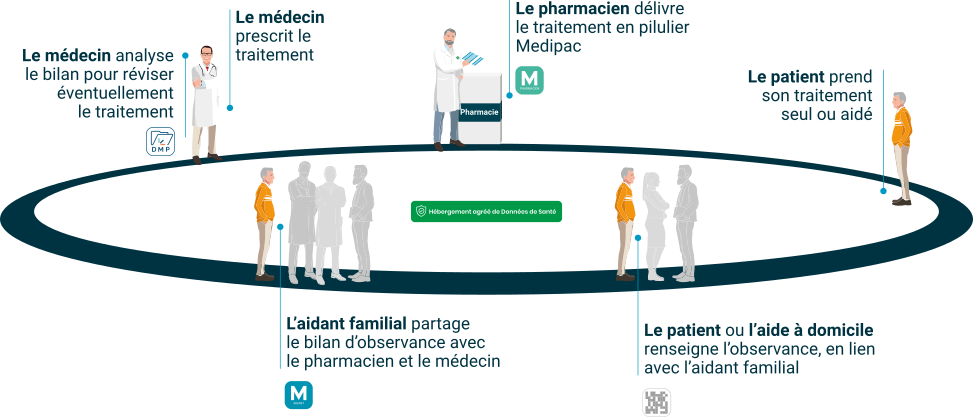
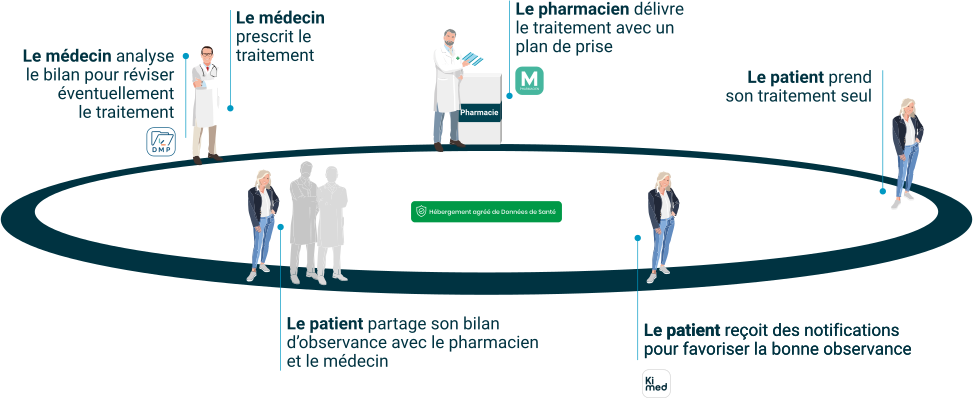
Using a pillbox requires close collaboration between doctors, pharmacists, nurses and caregivers. Each plays an important role in ensuring that medication is properly organized, dosed and administered.
The doctor's role
The doctor is responsible for prescribing medication and ensuring that the patient understands his or her treatment. He or she must provide clear instructions, taking into account the patient's cognitive difficulties, and may recommend the use of a pillbox to structure doses. The doctor must also monitor compliance with treatment and adjust prescriptions if necessary.
The role of the pharmacist
As for the pharmacist, he or she often prepares the pill dispenser and ensures that doses are correct. He or she is also responsible for personalizing the labels and compartments, ensuring that the information is legible and understandable for the patient and their caregivers. The pharmacist can also monitor compliance, using tools such as mobile applications to ensure that patients are following their treatment correctly.
The role of caregivers and nurses
Caregivers and nurses are often on the front line in helping patients manage their day-to-day treatment. They must ensure that pillboxes are used correctly and that medication is taken on time. In the event of non-adherence or medication errors, they must quickly inform the professionals so that treatment can be adjusted if necessary.
New technologies and the pillbox: a valuable aid for patients with memory disorders
New technologies have significantly improved medication management, particularly for patients with memory disorders. Safety pill organizers and mobile apps allow for more accurate monitoring of medication adherence and enhance safety.
The secure pillbox
Safety pillboxes are equipped with audible and visual reminders via associated mobile applications, alerting patients when it's time to take their medication. These devices are particularly useful for people with memory problems, as they provide an extra reminder of when to take their medication. Mobile applications also enable caregivers or healthcare professionals to monitor compliance remotely.
Mobile applications
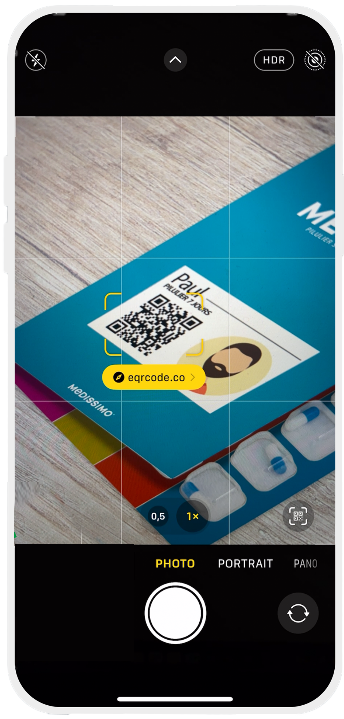
Mobile apps make it possible to track medication intake in real time. By scanning a QR code on the pill organizer, caregivers can verify whether the patient has taken their medication and view package inserts and dosages. This immediate access to treatment information also facilitatesaccess to treatment in an emergency, when the patient is unable to describe what they are taking on their own. Apps like Medissimo allow caregivers and healthcare professionals to monitor medication adherence remotely, ensuring more rigorous treatment management.
Best practices for maximizing pillbox efficiency
To ensure optimal use of the pill organizer, certain best practices should be followed. These include educating patients and caregivers on how to use the pill organizer correctly, customizing labels to meet individual needs, and using automatic reminders on mobile apps to prevent missed doses.
Education and training
Caregivers and carers need to be trained in the use of the pill dispenser, including how to fill the compartments correctly and check that medication is taken at the right time. Professionals, such as pharmacists and nurses, can provide practical demonstrations and advice on day-to-day medication management.
Label personalization
Personalized labels are essential for patients with memory disorders. Large print, color coding and pictograms can help differentiate medications and prevent errors. By customizing the pill dispenser to specific needs, medication errors can be significantly reduced.
Regular monitoring and automatic reminders
Regular monitoring of medication adherence is necessary to ensure that patients are taking their medication correctly. Visual reminders on the pill organizer and app notifications help prevent missed doses, while also allowing healthcare professionals and caregivers to monitor medication intake.
How does the pillbox help people with memory problems?
The pill dispenser organizes medications by day and time, making it easier to take them regularly, and helping to prevent forgetfulness or confusion between medications.
What types of medication errors are common among people with memory disorders?
Common errors include forgetting to take a drug, taking it twice or confusing different medications, often linked to difficulties in remembering medical instructions.
How can new technologies like the secure pill dispenser help?
Secure pillboxes enable remote monitoring by caregivers via mobile applications.
What role does the pharmacist play in the use of pillboxes?
The pharmacist prepares pillboxes according to medical prescriptions, personalizes labels for better legibility, and helps ensure that medicines are taken correctly.
What are the best practices for using a pillbox for people with memory problems?
Best practices include educating carers and caregivers, personalizing labels for greater clarity, and using reminders to avoid forgetfulness.