Pillboxes and the prevention of medication errors in the home
Managing medications at home is a major challenge, particularly for people taking multiple medications or those with cognitive impairments. Unlike in a healthcare facility, where medication administration is overseen by trained staff and guided by written procedures, home care relies on a shared responsibility among the patient, their caregivers, the independent nurse, and the pharmacist. This arrangement creates its own potential points of failure, which a pill organizer prepared at the pharmacy helps to reduce.
What Makes Home Different
In healthcare facilities, the medication management chain is continuous: prescribing, dispensing, preparation, administration, and traceability are the responsibility of identified staff members who are on site. At home, this chain becomes fragmented.
The patient administers some of the doses—and sometimes all of them—on their own. The private nurse provides care during specific time slots, which do not necessarily cover all medication administration times throughout the day. The family caregiver fills in the gaps, without any training or supervision. The pharmacist dispenses the medication but only sees the patient when a prescription is renewed.
This discontinuity leads to situations that the facility is not familiar with. No one has a complete picture of what has actually been dispensed. A treatment adjustment decided during a consultation may take several days to be reflected in daily operations. A medication added by a second prescriber may never come to the attention of the regular pharmacist.
Polypharmacy, the leading risk factor
Polypharmacy, defined as taking five or more medications a day, is common among older adults and patients with chronic conditions. It automatically increases the likelihood of errors.
Managing multiple medications with different schedules and dosages becomes complex as the number of daily doses increases. Patients may confuse medications that are similar in shape, size, or color. The likelihood of missing a dose increases with the number of times a medication must be taken throughout the day. The risk of overdose or underdose increases when a patient is unsure of what they have already taken.
The unique characteristics of older adults taking multiple medications require a specific approach to treatment that takes into account both the number of medications and the patient’s ability to manage them.
The Most Common Mistakes Made at Home
Double dosing. The patient does not remember having already taken the dose and takes it again. This is the most common mistake among people with memory problems, but it also occurs in patients without cognitive impairment, simply because the medication was taken on autopilot.
Omission. A dose is skipped, most often the midday or evening dose, which are less routine than the morning dose. These reminders are primarily intended to prevent missed doses, which is the most common reason for nonadherence observed at home.
Mixing up medications. Two tablets that look similar are swapped. The risk increases when multiple boxes are stored together and the packaging looks alike.
Time difference. The medication is taken, but at an inappropriate time. For certain classes of drugs, this irregularity alters the concentration of the active ingredient and compromises the treatment’s effectiveness.
Continuing a discontinued treatment. A prescription is updated, but the old package remains in the cabinet and continues to be used. This error occurs specifically in home settings: in healthcare facilities, removing discontinued treatments is part of standard procedure.
How the Pill Organizer Makes a Difference
The pill organizer sorts medications by day and by time of administration. Each compartment contains all the medications for a given dose, which shifts the decision-making burden from the patient to the person preparing the medications.
The weekly pill organizer has compartments for each day of the week and for each time of day. Patients no longer have to identify their medications one by one or assemble their doses: they simply open the compartment corresponding to the current time.
The visibility of the compartments offers a second benefit that is often underestimated. An empty compartment indicates that the medication has been taken; a full compartment indicates that it was missed. This information is immediately apparent to the patient, a passing caregiver, or a nurse on duty. It turns uncertainty into a clear fact.
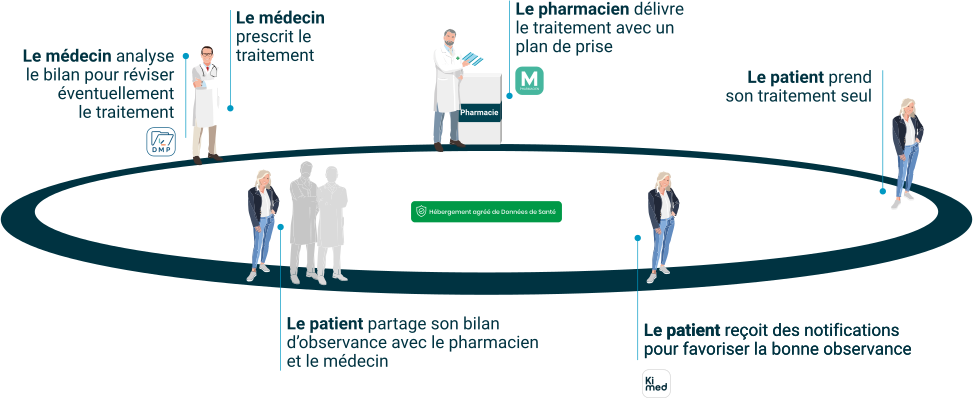
Some pill organizers are linked to a mobile app that notifies the patient when it's time to take their medication and allows for remote monitoring.
The single-use pill organizer prepared at the pharmacy
When the weekly pill organizer is for single-use only and is prepared at a pharmacy, it offers additional safeguards.
The pharmacist’s preparation is based on the current prescription, which eliminates the risk of continuing a treatment that has been discontinued. The double-check performed at the pharmacy ensures the accuracy of the contents of each compartment. Labeling can be customized for the patient, with larger print or color-coded markers, which is crucial for patients with visual impairments.
This process also creates a regular point of contact between the patient and their pharmacist, at a frequency that prescription refills alone do not provide.
The Role of Each Stakeholder
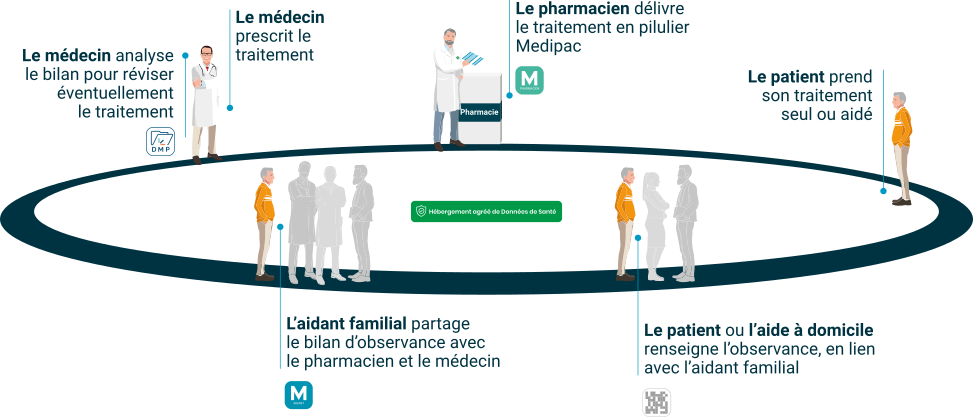
The prescribing physician adjusts the treatment and reassesses it. Clinical observations—such as adverse effects, changes in the patient’s condition, and issues that require a revision of the prescription—are reported to the prescribing physician.
The pharmacist dispenses medication, prepares the pill organizer, and ensures the traceability of the medication supply chain. Any questions regarding this supply chain—such as compliance with the prescription, drug interactions, availability of a treatment, or adjustments to the packaging—are directed to the pharmacist.
Independent nurses provide care and monitor patients in their homes. Their role gives them a direct insight into how patients actually take their medications—an insight that neither doctors nor pharmacists have.
Family caregivers ensure continuity between transitions in professional care. They are often the first to notice a discrepancy, a refusal to take medication, or a new difficulty.
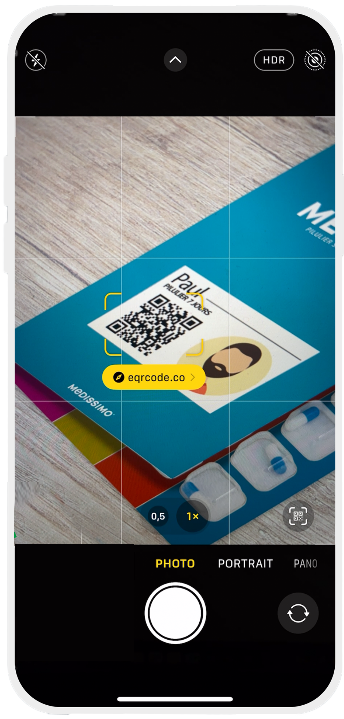
Some pill organizers are linked to a mobile app that allows independent nurses and caregivers to track medication intake. Any discrepancies identified can be reported to the pharmacist for issues related to the medication supply chain, or to the prescribing physician when they warrant a reassessment of the treatment. This shared monitoring is particularly important in the care of palliative care patients, where treatment adjustments are frequent and coordination is key to the patient’s comfort.
Setting Up a Pill Organizer at Home
Review the complete medication list. Before placing any medications in a pill organizer, it is essential to know all current treatments, including those prescribed by another doctor and those taken without a prescription. This step often reveals discrepancies between what is prescribed and what is actually being taken.
Dispose of any packaging that is no longer needed. Discontinued medications that remain accessible at home pose a direct risk.
Choose the right format for the patient. The choice between a daily and a weekly pill organizer, and between removable and non-removable compartments, depends on the patient’s level of independence, their manual dexterity, and whether or not they have a caregiver.
Explain how it works to the patient and their family and friends. Switching to a pill organizer changes a habit that may have been in place for several years. Without an explanation, the patient may continue to take pills from their old pill bottles at the same time.
Plan for follow-up. A well-prepared pill organizer that is never checked is of no use to anyone. Regular follow-ups—whether at the pharmacy or during a nurse’s visit—help identify any discrepancies before they become a problem.
What a pill organizer doesn't solve
A pill organizer helps manage medication intake; it does not guarantee it. A patient who refuses to take their medication will continue to do so. A patient with advanced cognitive impairment may no longer understand how to use the device.
Nor does the pill organizer replace a review of the prescription. Simply organizing the intake of twelve medications does not eliminate the need to ask whether all twelve are still necessary.
Finally, certain dosage forms are not suitable for repackaging. A pill organizer covers part of the treatment, rarely all of it, which means that a separate system for managing the remaining medication must be organized.
Frequently Asked Questions
What are the most common medication errors that occur at home?
Taking a double dose, missing a dose, confusing two similar-looking medications, and schedule discrepancies. Added to this is an error specific to the home setting: continuing to take a discontinued medication whose packaging remains accessible.
Who prepares a patient's pill organizer at home?
When prepared in the pharmacy by a pharmacist, the medication is guaranteed to comply with the current prescription and the contents are traceable. The patient or their caregiver can prepare a reusable pill organizer on their own, but without the double-check or automatic updates in the event of a change to the prescription.
Is the pill organizer suitable for all patients?
It is beneficial for most patients on multiple medications. Its effectiveness is limited in patients whose cognitive impairment is so advanced that they no longer recognize the purpose of the device, and when the majority of their medication consists of forms that cannot be unpackaged.
How can you tell if a patient is taking their medication as prescribed?
The condition of the compartments provides an immediate initial indication. Pill organizers linked to a tracking app allow independent nurses and caregivers to monitor medication intake remotely and identify recurring deviations.
What should you do when a discrepancy is found?
It depends on the nature of the issue. Any problem related to the medication’s distribution, preparation, packaging, or interactions should be addressed with the pharmacist. Any clinical observation—such as an adverse effect or a change in the patient’s condition—should be reported to the prescribing physician for a reassessment of the treatment.