Medication management in children is a delicate task, requiring meticulous attention and the right tools. Pillboxes, traditionally used by the elderly or people with multiple medications, can also have a positive impact on preventing medication errors in children, but in what way? How can these devices make it safer for young patients to take their medication, while complying with medical confidentiality standards?
The importance of preventing medication errors in children
Because of their vulnerability and ongoing development, children are particularly exposed to the risks associated with medication errors. These errors can have serious consequences, ranging from allergic reactions to drug intoxication. Polymedication, although less frequent in children than in the elderly, can occur in cases of chronic disease or complex disorders requiring several medications. In this context, the use of pillboxes adapted to paediatric needs can offer an effective solution for minimizing risks.
The specific challenges of medication management in children
Managing medications in children presents unique challenges. Doses often need to be adjusted according to weight and age, and medications may require precise dosing schedules to be effective. Children may have difficulty understanding the importance of their treatment, increasing the risk of forgetfulness or incorrect dosing. Parents or caregivers, meanwhile, have many responsibilities to juggle, and may unwittingly make mistakes.
Children's medicines can come in different shapes (syrup, tablet, capsule) and colors, which can lead to confusion. The use of pillboxes can help organize medications in a clear, structured way, reducing the risk of confusion.
Children, like adults, can forget to take their medication. Pillboxes, by segmenting doses by day and time of day, offer a practical solution to ensure that each dose is taken correctly. The visual and audible reminders built into some models can also be a great help.
Over- or under-dosing is a major risk for children. Pill dispensers allow medications to be pre-measured according to medical prescriptions, ensuring that each dose corresponds exactly to the recommended dose.
Features of child-friendly pillboxes
To be effective with children, pillboxes need to have certain specific features. They must be easy to use, secure and designed to protect the confidentiality of young patients' medical information.
Children's pillboxes should be intuitive and simple to use. Compartments should be clearly labeled and easy for parents and caregivers to open, yet secure enough to prevent access by young children.
Safety is a top priority. Pillboxes must be made from non-toxic materials and feature locking mechanisms to prevent unsupervised access by children.
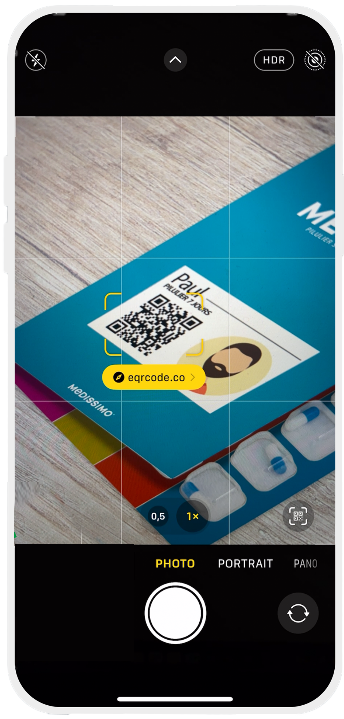
Confidentiality of medical information is just as important for children as it is for adults. Pillboxes should be designed to minimize exposure of sensitive data. The use of codes or symbols instead of medication names, as well as lockable compartments, can help protect the privacy of young patients.
The impact of digital technologies on children's pillboxes
Technological advances offer innovative solutions for improving pill dispenser efficiency and safety.
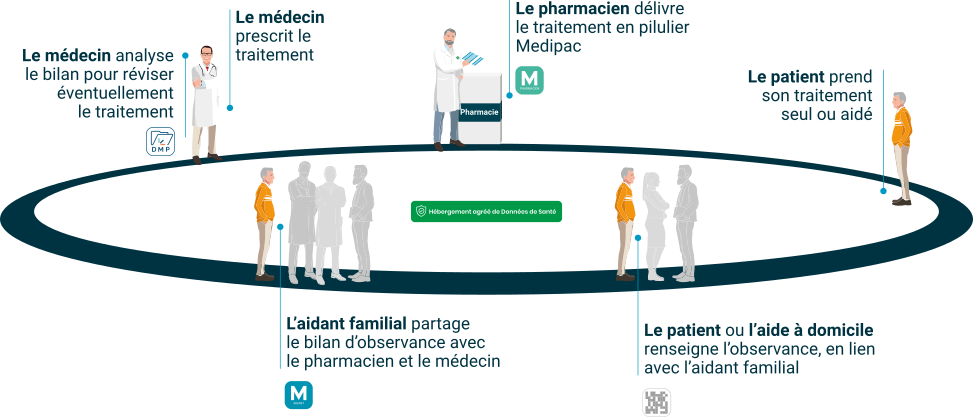
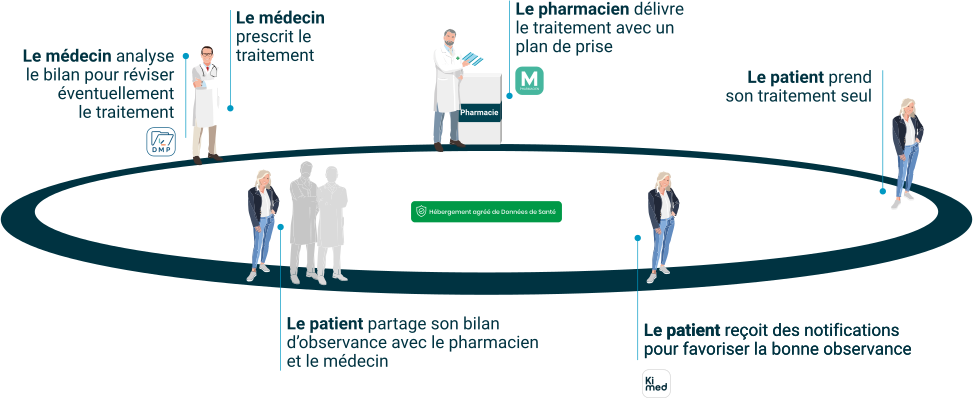
Mobile applications associated with pillboxes enable real-time monitoring of medication compliance. Personalized notifications remind parents when it's time to give medication, reducing the risk of forgetfulness.
The data collected by these applications can be analyzed to provide detailed reports on treatment compliance. This information is invaluable to doctors, who can adjust prescriptions according to the child's specific needs.
Good practice in the use of pillboxes for children
To maximize the benefits of pillboxes, certain best practices need to be adopted. These practices include education for parents and caregivers, secure management of pillboxes and awareness of the importance of medical confidentiality.
Parents and caregivers need to be trained in the correct use of pillboxes. This training should include instructions on how to fill pillboxes, store them and monitor medication intake. Older children can also be made aware of the importance of following their treatment.
Pillboxes should be stored in secure locations, out of the reach of small children. We recommend keeping them in locked cupboards or closed drawers. When on the move, pillboxes should be carried in discreet pouches or bags to avoid inadvertent exposure.
The confidentiality of medical information must be protected at all times. Parents need to be aware of the risks of exposing sensitive data, and take steps to minimize these risks. The use of discreetly labeled pillboxes and secure digital technologies can help protect confidentiality.
Pillboxes are an effective solution for preventing medication errors in children. By organizing and simplifying the taking of medication, they reduce the risk of forgetting, confusion and incorrect dosing. The digital technologies associated with pillboxes offer additional tools for improving compliance and protecting the confidentiality of medical information.
The adoption of secure pillboxes, combined with appropriate education of parents and caregivers, can greatly improve medication management in young patients. The solutions offered by companies like Medissimo, which provide innovative pillboxes adapted to children's specific needs, are a good illustration of the positive impact these devices can have on children's health and safety.
1. Why is the use of a pillbox compulsory to prevent medication errors in children?
Pillboxes help to structure and secure medication intake, reducing the risk of medication errors in children. It helps ensure that the prescribed dosage is respected, avoiding overdoses or oversights.
2. How can a pillbox improve medication compliance in children with chronic illnesses?
A pillbox helps parents organize the doses of chronic treatments, such as asthma or diabetes, guaranteeing good compliance and reducing the risks associated with non-compliance in children.
3. What advice can parents give to avoid medication errors with a pillbox?
Parents must fill the pillbox strictly according to medical prescriptions. Regularly checking doses and schedules is vital to prevent medication errors and ensure your child's safety. Your pharmacist can also prepare your pillboxes.
4. What advantages do secure pillboxes offer for children's medication management?
Secure pillboxes help prevent medication errors. Thanks to associated mobile applications, they can alert parents, reinforcing medication compliance.
5. How can children be made aware of the importance of following their treatment with a pillbox?
Parents can use a pillbox to teach children the importance of taking their medication regularly. This can be an educational way of empowering them, while reducing the risk of non-compliance and medication errors.