The pill dispenser, a simple but vital medication management device, has a significant impact on improving healthcare. More than just a therapeutic support tool, it is also an effective solution for reducing the costs associated with medication errors, optimizing treatment follow-up and improving the efficiency of healthcare professionals. So how can the pill dispenser help transform the healthcare system into a more economical, better coordinated model?
Reduce costs associated with medication errors
Medication errors represent a high cost for healthcare systems. They lead to avoidable hospital admissions, prolong hospital stays and increase clinical complications. The pill dispenser is one way of reducing these errors.
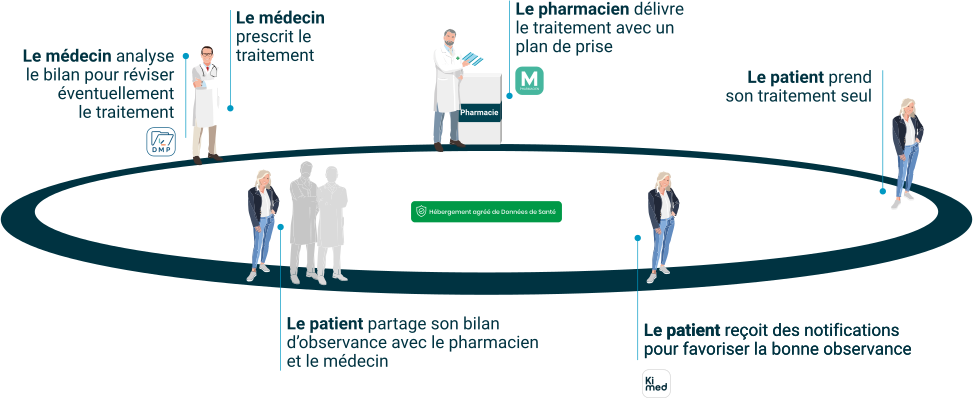
By grouping medications according to time and day, the pill dispenser simplifies medication intake and reduces the risk of forgetting, overdosing or taking the wrong dose. For example, Medissimo 's Medipac pill dispenser offers clear organization and simplified tracking, thanks to its personalized labels and integration with online applications such as Kimed. These features help minimize errors, particularly in the case of multi-medicated or frail patients.
A well-used pill dispenser also helps prevent iatrogenia, the harmful side-effects caused by poor medication management. By avoiding these complications, the pill dispenser not only contributes to the patient's health, but also reduces the financial pressure on hospitals and health insurers.
Optimizing treatment monitoring
Regular, precise treatment monitoring is essential to avoid relapses, complications or treatment interruptions. Thanks to its modern functions, the pill dispenser helps patients and healthcare professionals maintain optimal compliance.
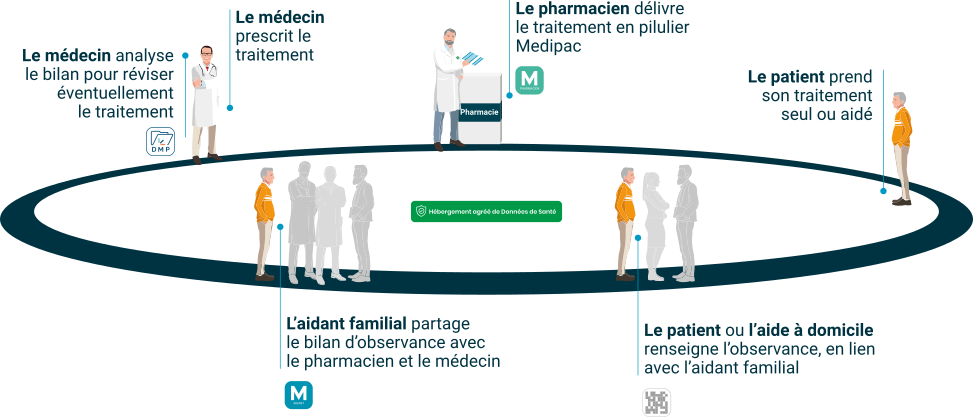
Secure applications enable caregivers to monitor medication intake and receive alerts in the event of non-adherence. This digitization of the medication circuit, enabled by software interfaces, improves data security and strengthens cooperation between the various healthcare professionals.
In addition, the generation of shared medication reviews, facilitated by the pill dispenser, enhances the role of the pharmacist. These reviews enable results to be shared with doctors and treatments to be adjusted where necessary, contributing to better use of medication and better prevention of complications.
Contribution to profitability and efficiency
The pill dispenser not only benefits patients; it also offers significant economic advantages to pharmacies and healthcare facilities.
Pharmacies can develop their business and patient base by offering profitable services linked to pill dispenser preparation. For example, Medissimo offers solutions such as the MonoMulti pill dispenser for patients in nursing homes, or the Medipac pill dispenser for those with reduced autonomy. These devices help to attract and retain customers who require rigorous treatment management.
The software interfaces associated with the pill dispenser improve PDA productivity (preparation of doses to be administered) by simplifying the tasks of pharmacy assistants. This guarantees operational simplicity and efficiency, while enhancing the pharmacist's role in securing the medication circuit.
Pharmacists can also carry out pharmaceutical interviews almost automatically, thanks to the organization provided by the pill dispenser. These discussions, which are fundamental to the proper use of medication, strengthen the patient-pharmacist relationship, while generating additional revenue for the pharmacy.
Digitizing the medication circuit: a lever for efficiency
Integrating pillboxes into a digital medication circuit is a major step forward in optimizing treatment management. By digitizing processes from prescription to administration, healthcare professionals can monitor patient compliance in real time, and anticipate any errors or oversights. Solutions such as the software interfaces offered by Medissimo facilitate communication between the various players involved, including doctors, pharmacists, nurses and caregivers, while guaranteeing data security.
This digitization also enables shared medication reviews to be produced almost automatically. These reports provide a global and precise overview of the treatments followed by a patient, fostering improved professional cooperation. Professionals can thus quickly identify any necessary adjustments or prevent iatrogenicity linked to drug interactions. This not only contributes to patient safety, but also enhances the role of the pharmacist as a key player in the care chain.
For pharmacies and medical-social establishments, digitization is an asset for improving productivity. By automating certain repetitive tasks, such as renewal alerts or the preparation of pillboxes, teams can concentrate on high value-added missions, such as assisting with treatment follow-up. This boosts team loyalty, improves PDA profitability, and activates a wider network of healthcare professionals through improved care cooperation.
Cooperation and enhancement of healthcare professionals
The pill dispenser acts as a catalyst for efficient professional cooperation. By activating a network of healthcare professionals, including doctors, nurses and pharmacists, it ensures continuous, consistent patient care.
Digital solutions associated with the pill dispenser, such as refill alerts or treatment monitoring applications, facilitate the exchange of information between professionals. For example, a doctor can consult the shared medication report generated by the pharmacist and adjust the prescription to the patient's needs.
This collaboration not only improves clinical outcomes, but also the security of treatment data, a key issue in the context of regulations such as the RGPD. Digital tools offer total traceability of medicines and ensure that only authorized persons have access to sensitive information.
Overall economic impact on the healthcare system
The widespread use of pillboxes, combined with advanced digital solutions, is having a positive impact on the entire healthcare system.
By minimizing medication errors, the pillbox reduces hospital admissions due to poor compliance or avoidable complications. This translates into significantly lower costs for insurance companies and healthcare institutions.
Pill dispenser preparation in the pharmacy, aided by technologies such as software exchange interfaces, frees up time for medical teams and dispensers. This rationalization of human resources contributes to better retention of the preparation team and increased productivity.
Improving quality of care and preventing missed renewals
Precise, personalized treatment monitoring, made possible by the pillbox, improves the quality of care provided. Patients benefit from better care, while healthcare professionals have the tools they need to work more efficiently.
Renewal alerts, integrated into solutions such as Kimed, prevent treatment interruptions due to out-of-date prescriptions. This ensures continuity of care and avoids costly complications.
The role of the pillbox in therapeutic patient education
Beyond its practical benefits, the pill dispenser has an impact on therapeutic patient education. It makes patients aware of the importance of strict compliance and understanding their treatment. Thanks to tools such as personalized labels and visual or audible reminders on the mobile app, the pillbox encourages patient autonomy, helping them to better integrate their treatment into their daily routine. This autonomy is essential for patients with chronic diseases requiring rigorous long-term management.
Digital solutions associated with pillboxes, such as those developed by Medissimo, also reinforce this educational aspect. For example, mobile applications such as Kimed enable patients to consult information on their treatments, access reminders, and even track their progress. This transparency and follow-up reinforces patients' confidence in their treatment plan, while giving them the means to better understand the impact of their compliance on their health.
Last but not least, the therapeutic education offered via the pillbox encourages greater collaboration between healthcare professionals and patients. By integrating the pillbox into pharmaceutical discussions or consultations, caregivers can explain drug interactions, potential side effects, and strategies for avoiding forgetfulness. This proactive approach contributes to safer, more effective medication use, while reducing complications and costs for the healthcare system.
The future of pillboxes in the healthcare system
As technologies evolve, the pill dispenser becomes a central player in the digital transformation of the healthcare sector. Its economic impact is not confined to cost reduction; it also contributes to improved cooperation in care, enhanced data security, and an enhanced role for healthcare professionals.
The solutions proposed by Medissimo, particularly for digitizing the medication circuit, show that the pill dispenser is much more than a simple logistical tool. It is a lever for optimizing care, strengthening professional networks, and promoting a sustainable, cost-effective healthcare model.
FAQ
How does the pill dispenser reduce medication errors?
It organizes medications by day and time, preventing forgetting, overdosing or confusing tablets.
What is the economic impact of the pill dispenser on the healthcare system?
The pill dispenser reduces avoidable hospitalizations, improves the productivity of medical teams, and reduces the costs associated with medication errors.
How does the pill dispenser improve professional cooperation?
It facilitates information sharing between doctors, pharmacists and nurses via shared medication reviews and digital tools.
What Medissimo solutions are adapted to patients' needs?
Medissimo offers pillboxes such as Medipac and MonoMulti, as well as applications for patients, caregivers and nurses, to monitor and optimize treatment.
Why are refill alerts important?
They prevent treatment interruptions due to out-of-date prescriptions, ensuring continuity of care and better compliance.