When it comes to caring for the elderly, collaboration between healthcare professionals is emerging as a fundamental pillar in guaranteeing quality care and optimal management. The challenges of inter-professional cooperation are numerous and vital, ranging from preventing medication errors to improving seniors' quality of life.
When it comes to medication compliance, there's a big gap: 82% of senior citizens claim to be "very good at complying with medical prescriptions", whereas in actual fact, only 32% do so. There is therefore a cognitive dissonance generated by breakdowns, oversights, delays or dose modifications (!). To avoid this, we need a global, collaborative approach with a 360° vision.
The importance of this collaboration is presented here, along with the positive impacts on elderly care and strategies for strengthening this holistic, personalized approach.
Collaboration between professionals
The need for close collaboration between the various healthcare players is more important today than ever, particularly in view of the aging population and the growing complexity of seniors' healthcare needs. Healthcare professionals, whether doctors, pharmacists, nurses or other medical professionals, need to join forces to provide comprehensive, coherent care for the elderly. Coordination between these different players helps to avoid information silos, duplication of treatment and medication errors, thus ensuring safe and effective care.
A family doctor works closely with a pharmacist to adjust medical prescriptions to the specific needs of the elderly patient, taking into account his or her medical history, potential drug interactions and personal preferences.
A home care nurse communicates regularly with the attending physician and pharmacist to monitor the patient's medical treatment, report any changes in his or her state of health, and coordinate the interventions needed to guarantee his or her safety and well-being.
The need for a holistic, personalized approach
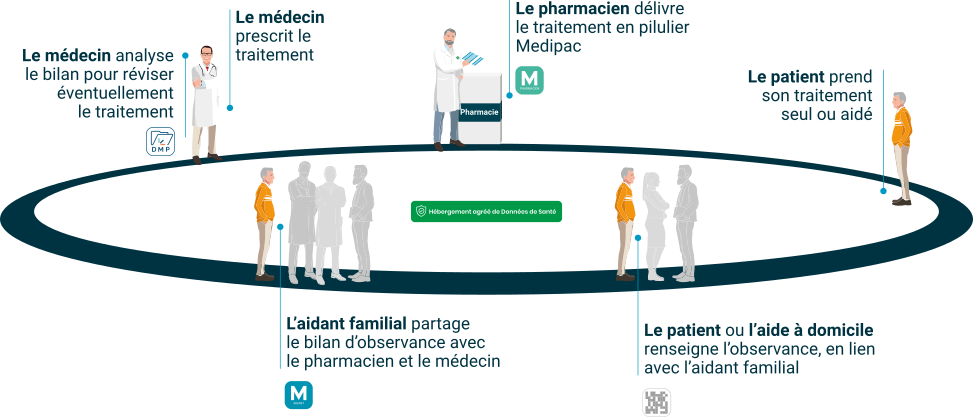
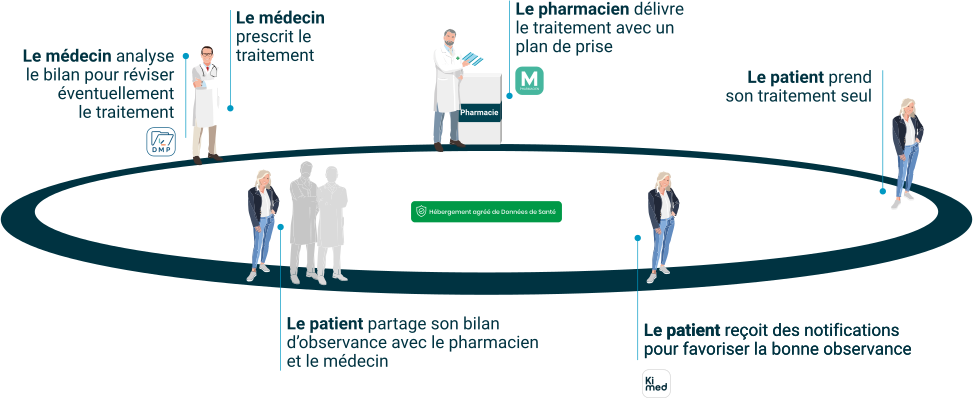
An interprofessional approach goes beyond simply coordinating care, and aims to provide comprehensive, holistic, patient-centred care. By bringing together the complementary expertise of different healthcare professionals, this approach makes it possible to address the medical, psychosocial and emotional needs of seniors in an integrated way. For example, a doctor can prescribe a treatment, a pharmacist can monitor and optimize it, while a nurse can provide day-to-day support at home. This close coordination ensures personalized care, tailored to the specific needs of each patient, and thus contributes to improving the quality of life and well-being of the elderly.
A collaborative care plan is developed for an elderly patient with several chronic diseases, involving regular consultations with the doctor, pharmacist and nurse to monitor health, adjust medications and provide educational and psychosocial support.
An interprofessional team meets to discuss the case of an elderly hospitalized patient, sharing relevant information about their diagnosis, treatment and discharge plan, to ensure a smooth transition to post-hospital care and reduce the risk of re-hospitalization.
Strategies for strengthening interprofessional collaboration
Promoting effective interprofessional collaboration requires the implementation of innovative strategies and practices designed to optimize communication, coordination and cooperation between the various healthcare players. These strategies have a positive impact on preventing medication errors, improving the quality of care and promoting the well-being of senior citizens.
The creation of secure digital platforms enables healthcare professionals to share patient information, such as test results, medical prescriptions and treatment plans, quickly and efficiently. These platforms facilitate communication between members of the healthcare team, ensuring coordinated, consistent care.
Regular meetings between doctors, pharmacists, nurses and other healthcare professionals provide a valuable opportunity to discuss complex cases, share knowledge and expertise, and make concerted decisions concerning the treatment and management of elderly patients. These meetings promote a collaborative and holistic approach, focusing on the individual needs of seniors.
Raising awareness among healthcare professionals of the importance of interprofessional collaboration and their respective roles in the care process is essential to fostering a culture of teamwork. Continuing education programs and interprofessional education opportunities enable professionals to develop the skills needed to work effectively together, thereby improving the quality and safety of care delivered to senior citizens.
Technological tools such as mobile applications, remote monitoring devices and electronic medical records facilitate communication and collaboration between healthcare professionals, even at a distance. For example, a pharmacist can receive real-time alerts on a patient's potential drug interactions, enabling him or her to intervene quickly to avoid complications.
Collaboration, a holistic, personalized approach and a variety of strategies all have a common goal: to avoid poor compliance with medication by senior citizens. Let's not forget that 13% of them have already modified their doses, and 15% stop taking their medication because they don't want to think about their illness any more . It's these very cases that need to be supported, both physically and, above all, psychologically.
Are you one of the 68% of French people who could improve their compliance?
Solutions do exist. Let's talk about them!