Aging well at home
According to IFOP, " 85% of French people surveyed would like to age at home ". Unsurprisingly, the desire to remain in one's own home for as long as possible, and even to die there whenever possible, is widely shared by the French population. However, simply wanting to do so is not always enough: many elderly people require regular care, or take medication that requires them to carefully monitor their daily intake. Unfortunately, people who are losing their independence are not always in a position to control and monitor their medication consumption, given the complexity of their care protocol.
What does "ageing well at home" mean?
"Aging well at home" is a term used to describe a set of policies, services and practices designed to enable older people to live independently and satisfactorily in their own homes throughout the aging process. This approach is opposed to the idea that aging is necessarily synonymous with dependency and institutionalization.
The "ageing well at home" approach is based on the recognition that the home can be a more endearing, familiar, comfortable and meaningful environment for the elderly, thus promoting a better quality of life. It requires collaboration between healthcare professionals, family carers, public players and civic communities to put in place infrastructures and services adapted to the needs of the elderly.
What aspects need to be taken into account to keep an elderly person at home?
Among the important aspects to consider in honoring the promise of "aging well at home" are maintaining autonomy, the main objective being to enable elderly people to remain in their own homes for as long as possible, with the help of home support services such as nursing care, domestic help, assistance with meals... etc. It can also be important to adapt the home with ramps, grab bars and emergency alert systems. We can also rely on healthcare technologies: there are numerous home monitoring devices and applications for preventing, detecting and monitoring problems, facilitating care at the earliest possible stage when needed.
What difficulties do you need to anticipate?
Choosing to age at home therefore implies the creation of a special ecosystem around you, and a whole personalized system: coordination of care, implementation of public policies favoring home care for the elderly, help for family caregivers - all requirements which, by definition, call for a substantial effort on the part of public authorities and healthcare players.
To date, carers, for example, still have no legal status: while they are increasingly recognized in society, the time, emotional burden and energy they devote to their loved ones who are losing their autonomy can sometimes lead to extreme psychological distress, and even to economic hardship.
According to the Pour La Solidarité association, "(the caregiver) does not benefit (from monetary compensation), since he or she performs this work mostly free of charge, without any salary or social rights being formally associated with this function. This free work can compensate for the role that should be fulfilled by public authorities or services subsidized by them."
When elderly people do not receive constant assistance despite their loss of autonomy, there is a high risk that care will be abandoned through forgetfulness or lack of understanding, putting their health directly at risk. An elderly person's wish to age at home can become a source of constant anxiety for their loved ones: the fear of a fall or of taking the wrong medication, which can have extremely serious consequences, becomes omnipresent.
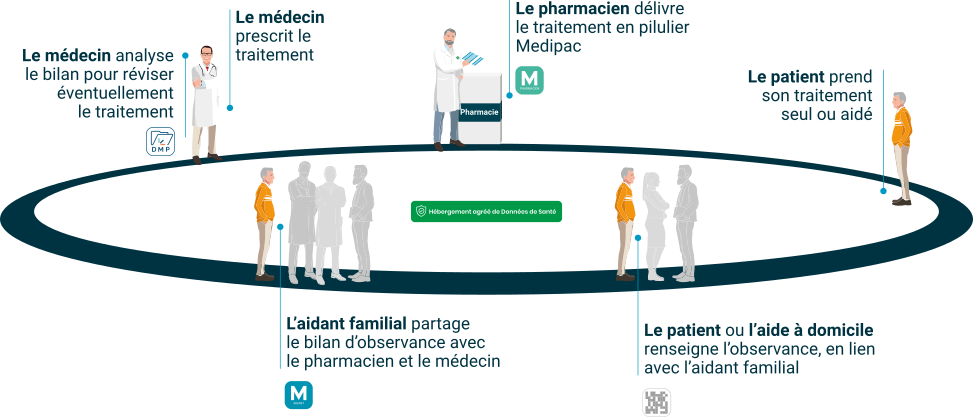
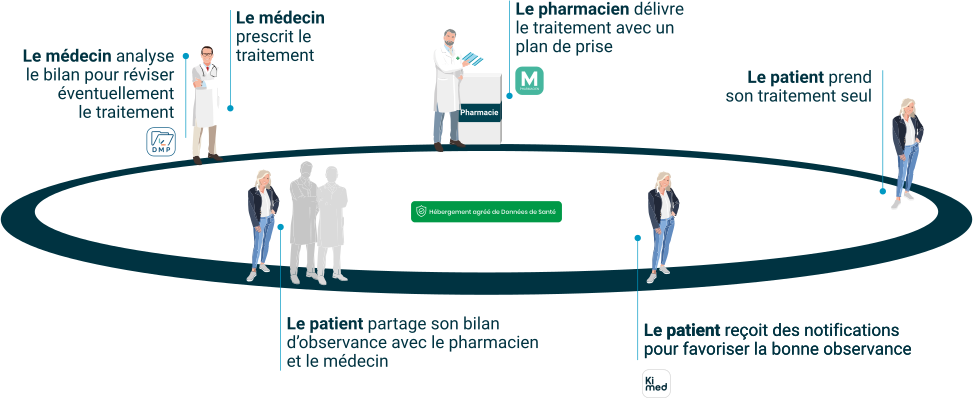
Medissimo, a company resolutely committed to the proper use of medicines, offers several healthcare applications for multi-medicated patients and their caregivers.
Based around a pillbox prepared in the pharmacy, these solutions make it easier to monitor compliance by people with multiple medications who are losing their independence, and thus contribute, at their own level, to making "ageing well at home" possible.